






When the golden beams of the sun’s light shine through the Spanish-moss-draped trees at the Edisto Island Presbyterian Church, it’s easy to think that a slow-moving shadow was just that—a shadow—but maybe, it was something else.
As far as ghost stories go on the island, the Presbyterian Church—more specifically, its graveyard—is home to one of the most well-known haunts around.
This is the story of Julia Legare.
Back in the mid-1800s, Julia Legare was visiting family on the island when she became ill and slipped into a coma. Her family anxiously awaited the day she would wake up, but that day never came. The family physician declared the young girl dead.
She was lovingly dressed for her funeral, where loved ones would pay their one last goodbye… or so they thought.
In those days, long before the deceased were treated with embalming fluids to preserve the body before burial, the ceremonial activities surrounding death were conducted quickly to avoid the inevitable decomposition. Poor Julia was buried the same day she “died,” after loved ones had a chance to pay their respects.
Her little body was taken from the church and interred in the family’s mausoleum. After she was placed inside the crypt, the marble door was closed and securely locked, providing a sense of finality to the tragic death of the child.
Julia’s family went on with their lives as best they could after suffering the loss of someone so young, and in time the pain of her death was replaced with happy memories of her life.
Fifteen years later, another death in the family required the mausoleum to be opened. It was then that the family realized what a tragic error they had made.
Julia’s remains, which had so long ago been entombed, were crumpled at the foot of the mausoleum’s door. She had been buried alive.
It is believed that her respiratory and heart rates had dropped so low that they were undetectable by the family physician, leading him to declare her dead. When she was interred that fateful day, she was merely in a coma—not gone. This led to the horrifying realization that she had woken up in her own tomb, next to the remains of long-dead family members, where she was unable to escape and had to wait for her actual death to come and free her from the terror she had awakened to.
The girl’s remains were entombed once again, as were those of the relative whose passing led to the grim discovery, and the door was securely closed once more.
Still reeling from the nightmare at the mausoleum, the family returned to the cemetery to pay respects. When they did, the door was open.
Thinking the open door must have been the result of it not being properly secured during the recent funeral, they shut it again and walked away.
A few weeks later, a clergyman at the church saw the door open and ordered it closed. This happened again… and again… and again throughout the decades. Chains and unbreakable locks were used to keep it sealed tight, but they would always break, and the door would open. As recently as fifty years ago, a door was installed that could only be removed with industrial heavy machinery—and that door was also opened. (Little Julia must have been particularly mad at that one, because it wasn’t just open—it was completely unhinged from the mausoleum.)
That’s when everyone gave up trying to keep it closed.
Today, the original marble door is nothing more than broken stone sitting in the grassy doorway of the tomb.
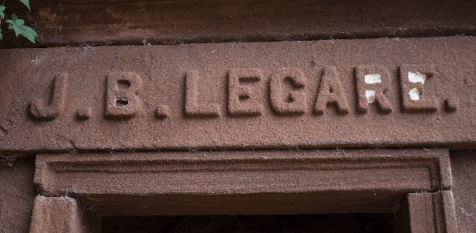
Now that there is no door to the J.B. Legare mausoleum, many believe Julia’s spirit can finally rest. Yet there are still some who say she guards the mausoleum—just to make sure no one ever gets the idea to put a door back on the very building that killed her all those years ago.
Visitors come to the church cemetery year after year to see the mausoleum and walk inside. Some report feeling an unexplained presence; others claim to have captured strange images on their cameras. As for what Julia thinks of it all, well… it seems she doesn’t mind the company.
Just don’t even think about shutting the door.